
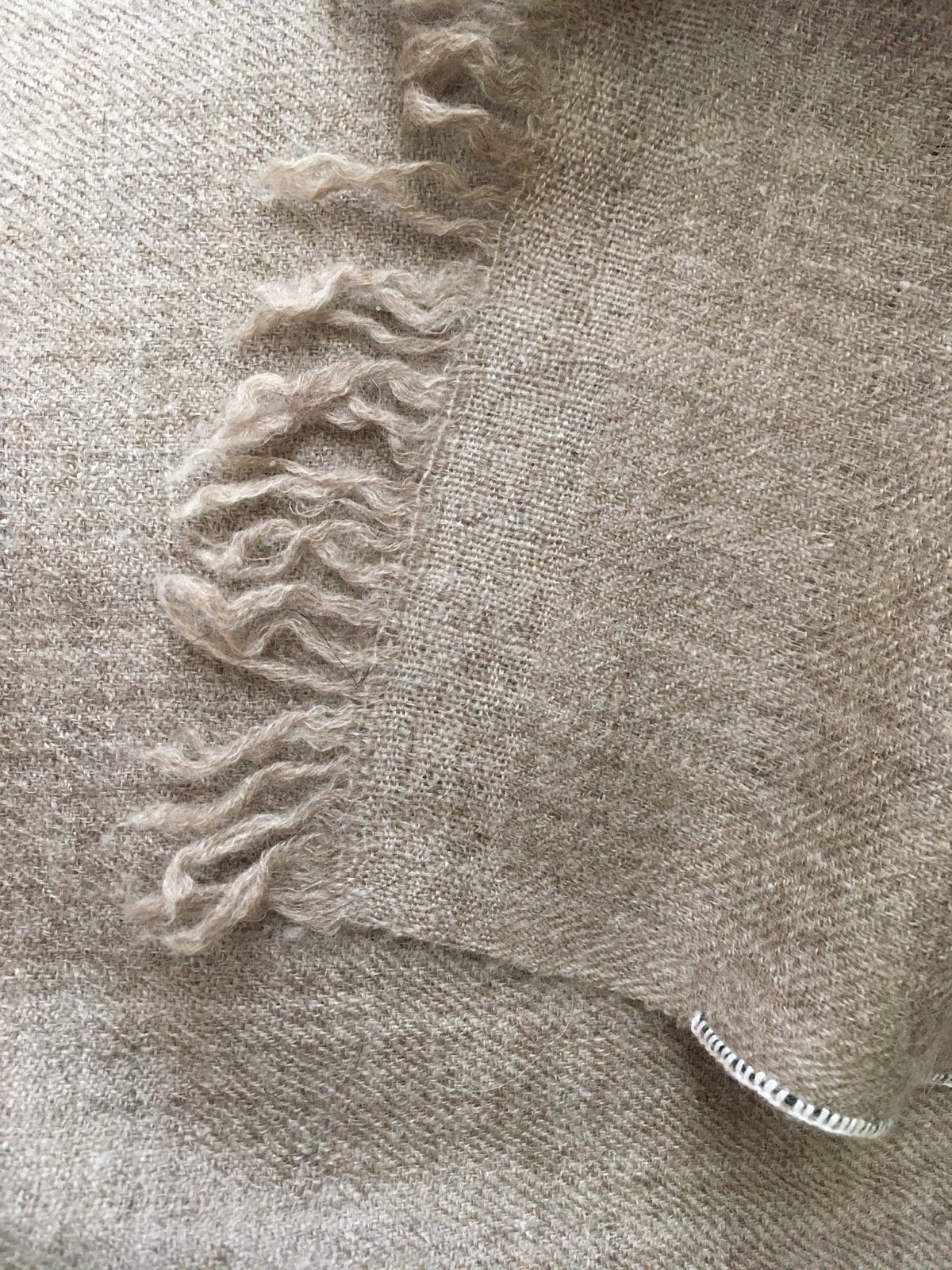
Most Pashmina sold in Kashmir is not Pashmina. The real fibre - combed from the underbelly of the Changthangi goat in Ladakh, hand-spun on a traditional charkha, handwoven on a loom - is one of the finest natural fibres in the world. A local's guide to what genuine Pashmina is, how to test it, where the craft actually comes from, and why a real handwoven shawl costs what it costs.
In This Article
- What Is Pashmina and Where Does It Actually Come From?
- How to Identify Genuine Pashmina: The Tests That Work
- Pashmina vs Cashmere: What Is Actually Different?
- Kani Weave vs Sozni Embroidery: The Two High Forms
- Where to Buy Genuine Pashmina in Srinagar in 2026
- Frequently Asked Questions: Pashmina Kashmir Authentic
**Quick Answer:** Genuine Kashmiri Pashmina is fibre combed from the Changthangi goat in the high-altitude Ladakh plateau, hand-spun on a traditional charkha, and handwoven on a wooden loom. The fibre diameter is 12-16 microns - finer than most commercial cashmere at 15-19 microns, and far finer than merino wool at 18-24 microns. A genuinely handwoven Pashmina shawl takes 3 to 5 days to produce and costs between ₹8,000 and ₹80,000 depending on weave complexity and embroidery. Anything sold as Pashmina for ₹500-2,000 is either machine-processed, mislabelled, or blended with synthetic fibre.
My grandmother kept three Pashmina shawls in a tin box. She wore one of them to formal occasions and put the other two away between seasons. I asked her once how old they were and she said she did not know exactly - one had come from her own mother's wedding trousseau. When I showed her a "pure Pashmina" bought at a Srinagar market stall by a visitor I was accompanying, she ran it between her fingers for a moment and put it down without saying anything specific. The look said it clearly enough. Authentic pashmina kashmir shawls carry their quality in the weight and give of the weave - something that is not easily described but is immediately clear to anyone who has handled the real thing. Kashmir Pulse is Via Kashmir's editorial channel, written by locals.
What Is Pashmina and Where Does It Actually Come From?
Pashmina is a specific type of fine cashmere fibre, derived from the Changthangi breed of goat native to the Changthang plateau in eastern Ladakh, at altitudes above 4,500 metres. The Changpa nomads who herd these goats have done so for centuries. The goats grow a thick winter undercoat - the pashm - to survive temperatures that drop below -40°C. In spring, as the goat naturally sheds this undercoat, the Changpa comb it out by hand. This combing, not shearing, is what makes the fibre distinct: the delicate underhair comes away without the coarser outer guard hairs.
The combed raw pashm is then transported to Kashmir, where it has been processed by specialist artisans for several hundred years. The spinning tradition is concentrated in villages around Srinagar, particularly in Kanihama, Wanigam, and the older city quarters around Nowhatta. A single skilled spinner on a traditional charkha (spinning wheel) produces enough yarn in a day to weave approximately 2 to 3 inches of a standard shawl. A plain handwoven Pashmina shawl requires 3 to 4 days of spinning and weaving combined. An embroidered Kani shawl - with complex woven-in patterns - can take several months.
How to Identify Genuine Pashmina: The Tests That Work
- The ring test: a genuine handwoven Pashmina shawl can be pulled through a standard finger ring. The fibre is fine enough and the weave open enough that the shawl collapses into itself and passes through. This is a real test, not folklore. Machine-woven synthetic blends are too dense and stiff to pass through easily. It does not work perfectly on heavily embroidered pieces - the embroidery thread adds density - but on a plain woven shawl it is reliable.
- The burn test: take a few threads from a hidden seam and burn them. Genuine Pashmina burns like hair - it smells of burning keratin (a distinctly biological, slightly acrid smell), the flame self-extinguishes, and the residue is a crushable grey ash. Synthetic fibre either burns with a chemical smell, melts rather than burns, or leaves a hard bead of residue. This test is definitive if you can do it.
- The weight test: a genuine Pashmina shawl of standard dimensions (200cm x 70cm) weighs between 150 and 250 grams. It should feel light in the hand and warm on the body. Machine-processed synthetic "Pashmina" is often heavier and stiffer for the same dimensions.
- The price test: if the price is below ₹4,000 for a full shawl sold as hand-spun and handwoven, the claim is false. A plain handwoven genuine Pashmina shawl cannot be made for less than this accounting for fibre cost, spinner wages, and weaver time. The floor price is real - genuine craft has a cost structure.
- The GI tag: since 2008, Kashmiri Pashmina has a Geographical Indication tag. Certified products from the Crafts Development Institute in Srinagar carry a holographic label with a unique ID. This is the most reliable documentation, though not all genuine artisans use it consistently.
Pashmina vs Cashmere: What Is Actually Different?
**Pashmina vs Cashmere: The Distinction** | | Pashmina | Commercial Cashmere | |---|---|---| | Source animal | Changthangi goat, Ladakh (4,500m+) | Various cashmere goat breeds, lower altitude | | Fibre diameter | 12-16 microns | 15-19 microns | | Processing | Hand-combed, hand-spun (traditional) | Machine-combed and spun (usually) | | Production region | Kashmir and Ladakh | China, Mongolia, Iran, others | | Certification | J&K GI Tag, Crafts Development Institute | Varies by country and brand | | Price range (shawl) | ₹8,000-80,000+ (handwoven) | Wide range - depends entirely on processing | Pashmina is a subset of cashmere: all Pashmina is cashmere (the species is the same), but not all cashmere is Pashmina. The distinction lies in the specific goat breed, the altitude of rearing, the combing method, and - in the Kashmiri context - the handprocessing tradition. Internationally, "cashmere" is a broader commercial category. The Geographical Indication for Kashmiri Pashmina specifically protects the hand-processed, Kashmir-origin version of the product.
Kani Weave vs Sozni Embroidery: The Two High Forms
The two most prestigious forms of Kashmiri Pashmina craft are distinct in technique. Kani weave is woven decoration: the pattern is created during weaving by introducing additional coloured weft threads using small wooden spools called kanis. The design is woven into the structure of the fabric, not applied to it. A complex Kani shawl can involve 50 to 100 individual kani spools operated simultaneously and may take a master weaver 6 to 12 months to complete. Prices for museum-quality Kani shawls run from ₹50,000 to several lakhs.
Sozni embroidery is needlework applied to a woven Pashmina base - typically fine chain stitch or needle stitch patterns depicting the traditional Kashmiri boteh (paisley) and floral motifs. The stitching is done by hand with needles of varying fineness, and the finest Sozni work is nearly invisible from the reverse - each stitch the same tension as its neighbour. A fully embroidered double Sozni shawl (pattern on both faces) takes a master embroiderer 6 to 18 months. These pieces are collected internationally. For travellers interested in seeing the craft in process, Via Kashmir can arrange workshop visits in Srinagar where both Kani and Sozni artisans are working - enquire at [viakashmir.in/enquire/general](https://viakashmir.in/enquire/general).
Where to Buy Genuine Pashmina in Srinagar in 2026
The safest starting point is the government sector. The J&K government emporium - the Handicrafts Emporium at Boulevard Road and the Crafts Development Institute (CDI) showroom in Rajbagh - sells certified Pashmina with GI tagging and documentation. Prices are transparent and non-negotiable. The quality range is wide but the provenance is documented.
For private purchases, the old city quarter around Nowhatta and the artisan workshops in Rainawari and Shivpora are where the actual weavers sell directly. Buying from a weaver's workshop rather than a tourist-market middleman gives you better prices, direct provenance, and the chance to see the craft in production. This is not always easy to navigate independently - knowing which workshops are genuine is local knowledge. Via Kashmir connects visitors to verified artisan contacts through its local network at [viakashmir.in/enquire/general](https://viakashmir.in/enquire/general). For broader Srinagar trip planning with verified stays, see [viakashmir.in/hotels](https://viakashmir.in/hotels).
A note on Pashmina in the tourist market: the Lal Chowk area and the Boulevard Road stalls sell a high volume of items labelled "pure Pashmina." The majority are machine-processed viscose or wool blends. This is not a new problem - the J&K Pashmina GI marking was created specifically to address it. Without the GI certificate or the ability to apply the burn test, tourist-market Pashmina purchases are a lottery. The advice from anyone who knows the craft: buy from a source with documentation, or buy from a weaver directly.
Frequently Asked Questions: Pashmina Kashmir Authentic
How much does genuine Pashmina cost in Kashmir in 2026?
A plain handwoven genuine Pashmina stole (roughly 200cm x 70cm) starts at ₹4,000-6,000 for undyed natural wool-tone and ₹6,000-12,000 for dyed plain weave from a verified workshop. Sozni-embroidered shawls begin around ₹8,000 for simple single-side work and rise to ₹30,000-80,000 for complex traditional patterns. Kani woven shawls start around ₹15,000 for a simple pattern and go well above ₹1,00,000 for master-quality pieces. Anything below these floors is either machine-processed or mislabelled.
What is the ring test for Pashmina?
The ring test is a traditional method for testing genuine handwoven Pashmina: pass a full-size shawl through a standard finger ring. The fibre fineness and open weave structure of a genuine handwoven Pashmina shawl allow it to collapse and pass through. Machine-woven synthetic blends and wool blends are too dense and rigid to pass through easily. The test works best on plain, unembroidered pieces; heavy embroidery adds bulk that can prevent even genuine Pashmina from passing cleanly.
What is the difference between Kani and Sozni Pashmina?
Kani Pashmina has its pattern woven into the fabric during the weaving process using small wooden spools (kanis) that carry coloured weft threads. The design is structural - part of the weave itself. Sozni Pashmina has its pattern applied to a finished plain-woven base through needlework - hand embroidery using fine needles and silk or Pashmina thread. Kani weave takes longer and is generally more expensive for equivalent complexity. Both traditions are specific to Kashmir and both carry GI protection.
Is Pashmina and cashmere the same thing?
Pashmina is a type of cashmere - both come from the cashmere goat species (Capra hircus). Pashmina specifically refers to the fibre from the Changthangi breed in Ladakh, hand-combed at high altitude and traditionally hand-processed in Kashmir. Commercial cashmere comes from various goat breeds at lower altitudes worldwide, typically machine-processed. The fibre diameter of genuine Pashmina (12-16 microns) is finer than most commercial cashmere (15-19 microns), which is why the finished fabric is softer and more delicate. The Geographical Indication protects the Kashmiri origin and hand-processing as distinct from commercial cashmere.
How do you care for a genuine Pashmina shawl?
Hand wash in cold water with a mild, pH-neutral shampoo or specialist wool wash - never machine wash. Do not wring; press gently in a towel and lay flat to dry. Avoid hanging while wet, as the weight of water will stretch the weave. Store folded in a cotton bag, not compressed in plastic. Cedar blocks or dried lavender deter moths, which are the main physical threat to Pashmina in storage. A genuine Pashmina shawl maintained this way lasts for decades and improves in softness with careful washing.
Planning a trip to Kashmir? Via Kashmir offers custom itineraries, verified hotels, and local cab services - planned by people who live here.
Plan Your Kashmir Trip →Kashmir Pulse Editorial
Culture Writer
Writing about Kashmir from the inside - hotels, culture, seasonal travel, and the stories that don't make it into guidebooks.
Ready to Experience Kashmir?
Let our local experts craft a personalised trip for you - hotels, houseboats, cabs, and experiences handpicked for your travel style.