
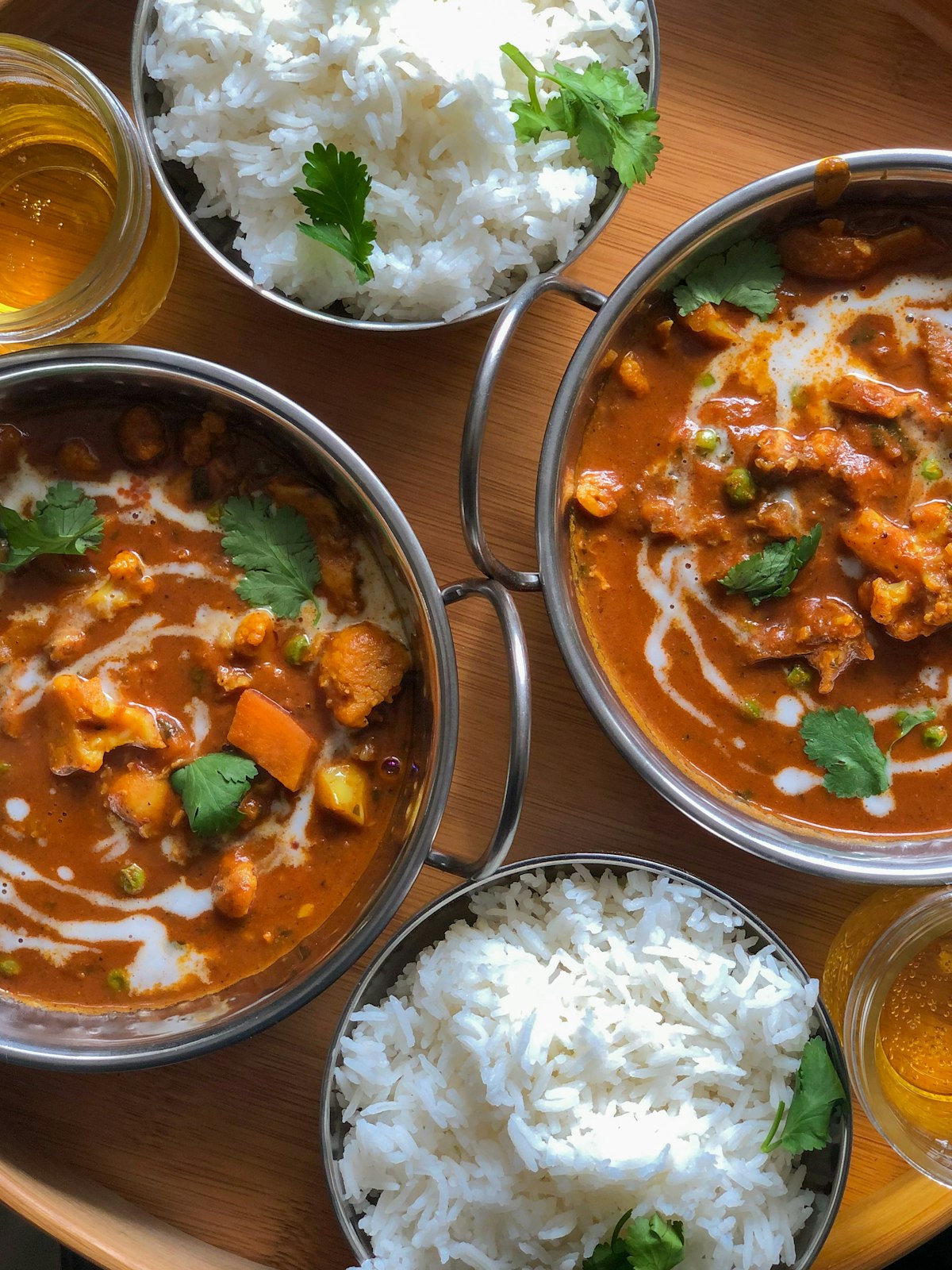
Wazwan is Kashmir's 36-course ceremonial lamb feast, cooked overnight by hereditary specialist cooks called wazas. Here is what it contains, who makes it, where visitors can actually eat it, and what sets Kashmiri Rogan Josh apart from every other version you have tried.
In This Article
**Quick Answer:** Wazwan is Kashmir's traditional multi-course ceremonial feast, served at weddings and significant gatherings. It consists of up to 36 dishes — almost entirely lamb — cooked overnight by specialist hereditary cooks called wazas. Key dishes include Rogan Josh, Yakhni, Tabak Maaz, Seekh Kabab, and Gushtaba. Food is served on a large shared copper plate called a traem, with four guests eating from each plate. The feast ends when Gushtaba is served.
My uncle's wedding was in October, in a house in Rainawari. The waza and his team arrived the night before with whole carcasses of lamb and a wood-fire setup in the courtyard. By 4 AM the smell had reached every house in the lane. That is how you know a Wazwan is being prepared — not from an invitation card, but from the smell of tallow and spice and wood smoke at dawn. Kashmir Pulse is Via Kashmir's editorial channel, written by locals who have eaten at hundreds of these meals, not described them from a distance.
What Does a Kashmiri Wazwan Actually Consist Of?
A full Wazwan has 36 courses by tradition, though most modern celebrations serve between 12 and 20. The full menu is almost exclusively lamb — goat and beef appear occasionally, but lamb is the foundation. Dishes are grouped into what arrives early (fried and grilled preparations) and what arrives late (slow-cooked curries, with the finishing dish, Gushtaba, served last). Tabak Maaz — ribs fried in fat until completely crisp — arrives early. Seekh kababs and shami kababs follow. Then the curries: Rogan Josh in deep red, Yakhni in yoghurt-white, Marchwangan Korma for heat, Dhaniwal Korma with coriander. The meal ends with Gushtaba — large hand-pounded meatballs in a yoghurt-and-cream sauce — which signals the feast is complete.
Who Cooks the Wazwan? Understanding the Waza
The waza is a hereditary professional cook — whole families in Kashmir have practiced this craft across generations. A head waza and his assistants handle everything: sourcing the meat, butchering, grinding spices in stone mortars, overnight cooking over wood fires in large copper vessels called deg. The waza does not use a recipe card. Spice ratios and cooking times are memorized and passed within families. According to records from the J&K Directorate of Handicrafts and Handloom, the waza tradition is traced to the reign of Sultan Zain-ul-Abidin — known as Bud Shah — in the 15th century, when Central Asian cooks were brought to the Kashmir Valley and their techniques merged with local ingredients.
How Is Wazwan Served?
Guests sit in groups of four on floor mats or around low tables. A large copper traem arrives, heaped with rice and the first round of dishes arranged around the mound. The four guests eat together from the same plate — this communal arrangement is deliberate, not incidental. Between courses, a small bowl of methi (fenugreek) water is passed around as a digestive. The final dish, Gushtaba, arrives separately in individual portions. When the Gushtaba is finished, the feast is over. Asking for more after the Gushtaba arrives is considered poor form.
Where Can Visitors Eat Wazwan in Srinagar?
The honest answer: the best Wazwan is at a wedding, and weddings are private. But several Srinagar restaurants serve full Wazwan plates. Mughal Darbar on Residency Road has been the most consistent since the 1960s. Ahdoos on Maulana Azad Road is another reliable option. Expect to pay ₹600–₹900 per person for a restaurant Wazwan plate. Some houseboats and guesthouses arrange Wazwan dinners on advance request. Via Kashmir sometimes organises home-hosted Wazwan dinners for guests — you can ask about this when you [plan your trip](https://viakashmir.in/enquire/general). That experience is closer to the real thing than any restaurant.
Wazwan vs Everyday Kashmiri Cooking: What Is the Difference?
**Wazwan vs Daily Kashmiri Food** **Wazwan:** Ceremonial, all-meat, cooked by professional wazas over 12–14 hours, served communally on a copper traem, occasions-only **Daily Kashmiri cooking:** Includes vegetarian dishes (Dum Aloo, Haak greens, Nadru Yakhni), simpler preparations, home-cooked, served in individual portions **Overlap:** Rogan Josh and Yakhni appear in both. The technique is the same — the scale, the occasion, and the intent are completely different.
Frequently Asked Questions About Kashmiri Wazwan
Is Wazwan vegetarian-friendly?
Wazwan is not vegetarian. It is almost entirely lamb-based. A traditional Wazwan has no vegetarian dishes at all. Kashmiri cuisine has excellent vegetarian options — Dum Aloo, Haak, Chok Vangun, Nadru Yakhni — but these are separate from Wazwan and would not be served at one.
How many dishes are in a traditional Wazwan?
A full traditional Wazwan has 36 courses. In practice, most celebrations today serve 12 to 20 dishes. The number has come down over time due to cost and practicality, but the key dishes — Tabak Maaz, Rogan Josh, Yakhni, Seekh Kabab, Gushtaba — are always present at any genuine Wazwan.
What makes Kashmiri Rogan Josh different from other versions?
Authentic Kashmiri Rogan Josh uses ratanjot (alkanet root) for its deep red colour, not tomatoes or food colouring. It is lamb, slow-cooked in mustard oil, using dried Kashmiri red chilies that add colour more than heat. The version served in most Indian restaurants outside Kashmir is a different dish with the same name — it typically uses onions, tomatoes, and cream, none of which appear in the original.
What is Gushtaba and why does it end the feast?
Gushtaba is large, hand-pounded meatballs cooked in a yoghurt-and-cream gravy. It is the richest dish in the Wazwan and traditionally signals that the meal is complete. The meatballs must be uniform in size and texture — pounded by hand until smooth — and the yoghurt gravy cannot split during cooking. This requires considerable skill. When the Gushtaba arrives, guests know they are eating the last course.
Can tourists attend a Wazwan feast?
Wazwan is served at private events — weddings and family gatherings — so tourists cannot simply attend one. However, as mentioned above, Srinagar restaurants and some guesthouses serve Wazwan-style meals, and Via Kashmir can sometimes arrange a home-hosted Wazwan dinner for groups visiting Kashmir. It requires advance planning.
Curious about Kashmir's culture beyond the usual tourist trail? Kashmir Pulse is Via Kashmir's editorial channel, written by locals. For custom itineraries and local food experiences, Via Kashmir is where most repeat visitors start planning.
Plan a Cultural Trip to Kashmir →Kashmir Pulse Editorial
Culture Writer
Writing about Kashmir from the inside — hotels, culture, seasonal travel, and the stories that don't make it into guidebooks.
Ready to Experience Kashmir?
Let our local experts craft a personalised trip for you — hotels, houseboats, cabs, and experiences handpicked for your travel style.