
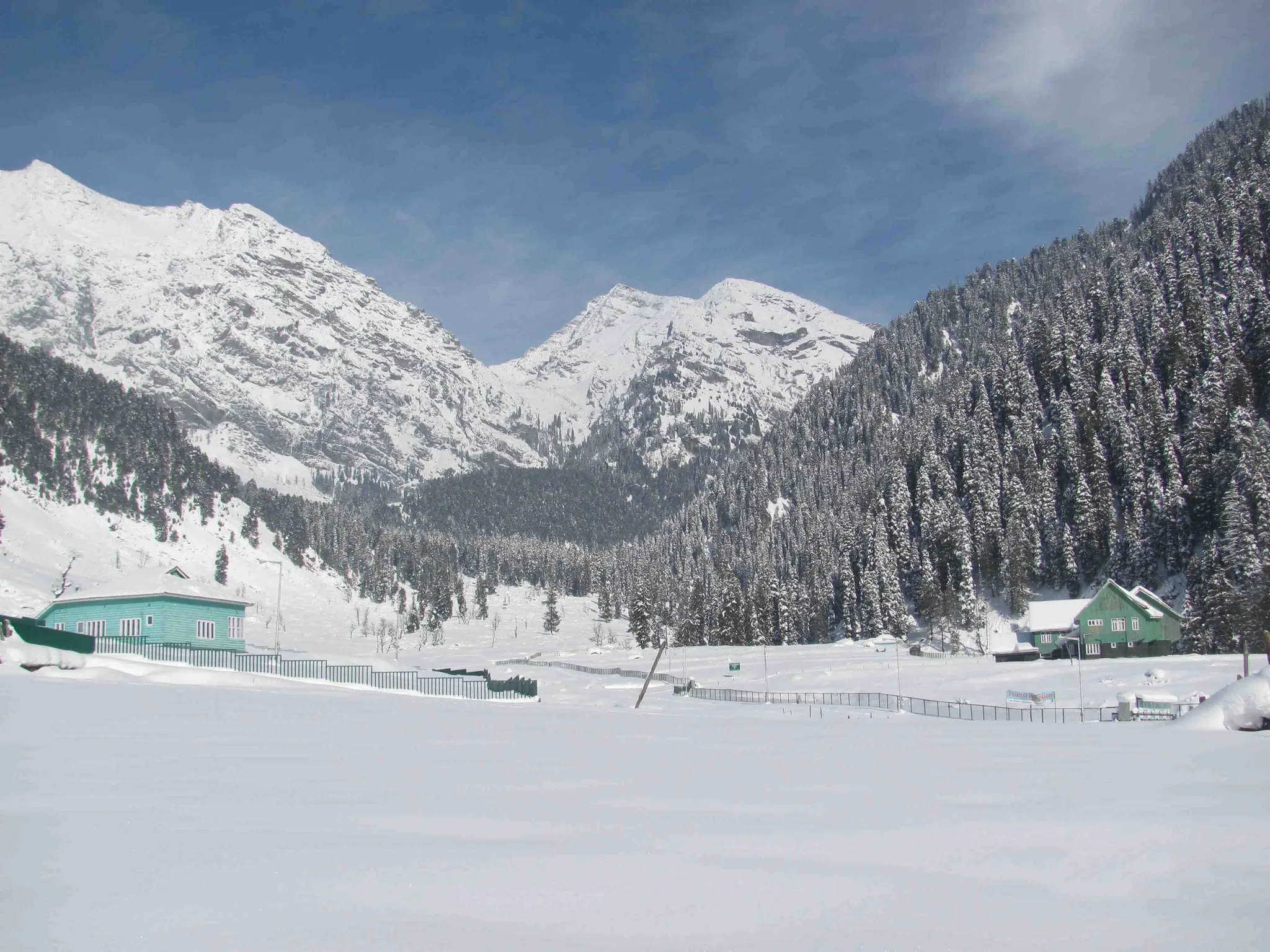
Kashmir's largest glacier is retreating visibly year on year. A 4-5 day trek from Aru Valley takes you to 4,200m. Here is what the route is actually like.
Planning this trip?
Kashmir packages from ₹6,499/person with hotels, private cab and sightseeing. Our Srinagar team replies in 30 minutes (9am to 9pm).
In This Article
Quick Answer: The Kolahoi Glacier trek is a 4-5 day return trek from Aru Valley (2,400m) to Kolahoi Glacier (4,200m), covering roughly 40km total. Kashmir's largest glacier at 17 square kilometres, it is retreating noticeably each year. The route requires a licensed guide, forest department permits, and basic camping equipment. Best done June through September.
At a Glance | Starting point: Aru Valley, 2,400m (11km from Pahalgam). Highest point: Kolahoi Glacier, 4,200m. Duration: 4-5 days return. Distance: 40km total. Guide cost: Rs 1,000-1,500/day. Permits: required from Forest Department, Pahalgam. Plan your trek via viakashmir.in.
Kolahoi is a Sanskrit word meaning "mountain of light" - and the peak that feeds the glacier, Kolahoi (5,425m), earns that name in the early morning when the first sun hits the summit pyramid above the ice. The glacier itself feeds the Lidder River, which runs through Pahalgam and Aru. People in the valley have been climbing to this glacier for generations - for pilgrimage, for grazing, for water. Now trekkers come too. Kashmir Pulse is Via Kashmir's editorial channel written by locals. For organised Kolahoi glacier treks with guide, permit, and camping equipment included, viakashmir.in handles the logistics from Srinagar or Pahalgam.
What is the Kolahoi Glacier trek route day by day?
The standard 4-day route from Aru proceeds as follows. Day 1: Aru (2,400m) to Lidderwat (3,050m), approximately 12km and 4-5 hours of trekking. The trail follows the Lidder River through dense conifer forest before opening into the Lidderwat meadow, a wide grassy plain with several camping spots. Day 2: Lidderwat to Kolahoi Base Camp (3,600m), approximately 8km and 4 hours. The trail gains altitude through alpine meadow with views of Kolahoi Peak appearing above. Day 3: Base Camp to Kolahoi Glacier and return to Base Camp (or Lidderwat). The ascent from base camp to the glacier front takes 2-3 hours at altitude. The glacier itself is a 17 sq km ice mass with a visible meltwater lake at the snout. Day 4: Lidderwat back to Aru, 12km, 4-5 hours. Some trekkers do this in 5 days by adding an acclimatisation day at Lidderwat, which is strongly recommended for anyone without recent high-altitude experience.
What permits and guides are required for Kolahoi?
A licensed guide is mandatory on this route - the Forest Department of J&K enforces this at the Aru trailhead checkpoint. You cannot start the trek without a guide. Guide costs run Rs 1,000-1,500 per day for a registered guide, plus their food and accommodation. Pony handlers for equipment carry (Rs 700-900 per pony per day) are optional but recommended for a more comfortable experience. Permits are issued by the Wildlife Warden office at Pahalgam and cost approximately Rs 200-400 per person for the trek zone. Your guide will typically arrange permits as part of the service - confirm this explicitly when booking. Camping equipment (tent, sleeping bag rated to -10C, cooking stove) must be arranged in advance - rental available in Pahalgam from Rs 300-600 per item per day.
Related reading: White Water Rafting in Kashmir: Lidder & Sindh River Guide 2026-27
Kolahoi Glacier Trek vs Kashmir Great Lakes Trek - which should you do?
- ✓Duration: Kolahoi is 4-5 days. Kashmir Great Lakes is 7-8 days. Kolahoi fits a shorter trip window.
- ✓Difficulty: Both are moderate to strenuous. Kolahoi's highest point is 4,200m. Great Lakes crosses passes up to 4,100m but the cumulative daily distances are higher.
- ✓Scenery: Great Lakes is famous for its sequence of high-altitude lakes (Vishansar, Krishansar, Gadsar, Satsar, Gangabal). Kolahoi's highlight is the glacier and the peak above it. Different types of dramatic.
- ✓Permits and logistics: Kolahoi is slightly easier to organise independently from Aru. Great Lakes requires more advance planning due to its circuit nature.
- ✓Best month: Both are best in July-August. Kolahoi is also excellent in June. Great Lakes needs snow-free passes which is more reliably July-August.
- ✓Glacier experience: Kolahoi gives you direct glacier access. Great Lakes does not include glacier terrain.
- ✓Verdict: If you have 4-5 days and want a glacier experience, Kolahoi. If you have 7-8 days and want alpine lakes and a full mountain circuit, Great Lakes.
Book for this trip


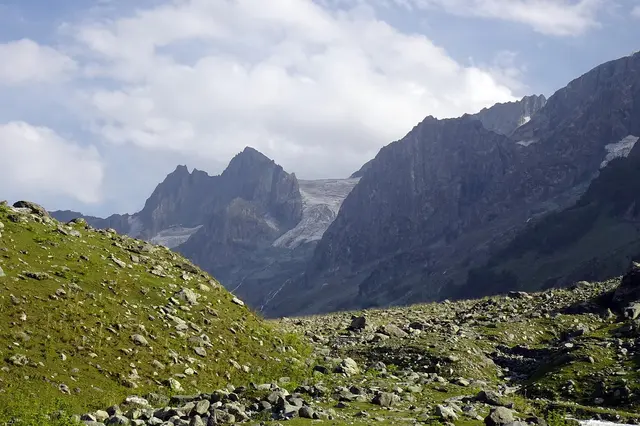
Frequently asked questions about the Kolahoi Glacier trek
How difficult is the Kolahoi trek?
Moderate to strenuous. The altitude gain is significant - 1,800m from Aru to the glacier. The trail is clear and well-used, with no technical climbing required. Anyone who walks regularly and is comfortable with multi-day hiking at altitude can complete it. The main challenge is the altitude at base camp (3,600m) and at the glacier itself (4,200m), where some trekkers experience mild altitude sickness. Acclimatise properly - spending an extra day at Lidderwat before ascending to base camp makes a significant difference. Fitness preparation: 4-6 weeks of regular hiking with loaded pack recommended.
Do I need a guide for Kolahoi?
Yes, legally and practically. The Forest Department requires a licensed guide and checks at the Aru trailhead. Beyond the legal requirement, the route above Lidderwat has sections where the trail is not always obvious, particularly in early June when residual snow obscures path markers. A good local guide also knows the current glacier conditions - the Kolahoi glacier has retreated significantly in recent years and the safest approach route to the ice changes season to season. Guides from Aru village know this terrain well and many have been guiding it for 20+ years.
What permits are needed for the Kolahoi Glacier trek?
You need a trekking permit from the Wildlife Warden office in Pahalgam, approximately Rs 200-400 per person. Your guide handles this and it takes about 30 minutes to process. Some trekkers also need an Inner Line Permit for certain sections depending on their proximity to the Line of Control - your guide will advise on this. Foreign nationals require additional registration at the Pahalgam police post, which your guide will accompany you to complete. None of this is particularly burdensome but it requires a half-day in Pahalgam before you start the trek.
What is the best month for the Kolahoi trek?
July and August are ideal. By July, the main trail to Lidderwat is clear of snow, the meadows are green, and the glacier is fully accessible. August offers similar conditions with slightly longer clear-weather windows. June is possible but the high section above Lidderwat may still have snow requiring care on the ascent. September is also excellent and has the advantage of fewer trekkers - by September school holidays are over and the trails are quieter. Avoid October for this route - night temperatures at base camp (3,600m) will be at or below freezing and the window before early snowfall closes.
How far is the Kolahoi Glacier from Aru Valley?
Aru village to the Kolahoi Glacier front is approximately 20km one way, covering an altitude gain of 1,800m. By trek (walking), it takes 2 days to reach the glacier from Aru with a camp at Lidderwat (12km, day 1) and another 8km and 550m of altitude gain to base camp on day 2. The glacier face is about 1-2 hours above base camp at 3,600m. The total round trip from Aru is 40km over 4 days. If you are considering a day trip to the glacier from Aru, it is not realistic without horses for speed - and even on horseback, a Kolahoi day trip is a 12-14 hour day from Aru.
Kolahoi Glacier covered 17.4 square kilometres in 2000. By 2020, satellite imagery showed it had retreated to approximately 14.8 square kilometres. At the current rate of recession, the accessible glacier front visible from base camp will be significantly smaller by 2035. This is one of the treks worth doing sooner rather than later.
Via Kashmir organises fully supported Kolahoi Glacier treks with licensed guide, permits, camping gear, and Pahalgam accommodation sorted before the trek starts.
Book a Kolahoi glacier trek →Planning more than this? Get a full itemised Kashmir quote