
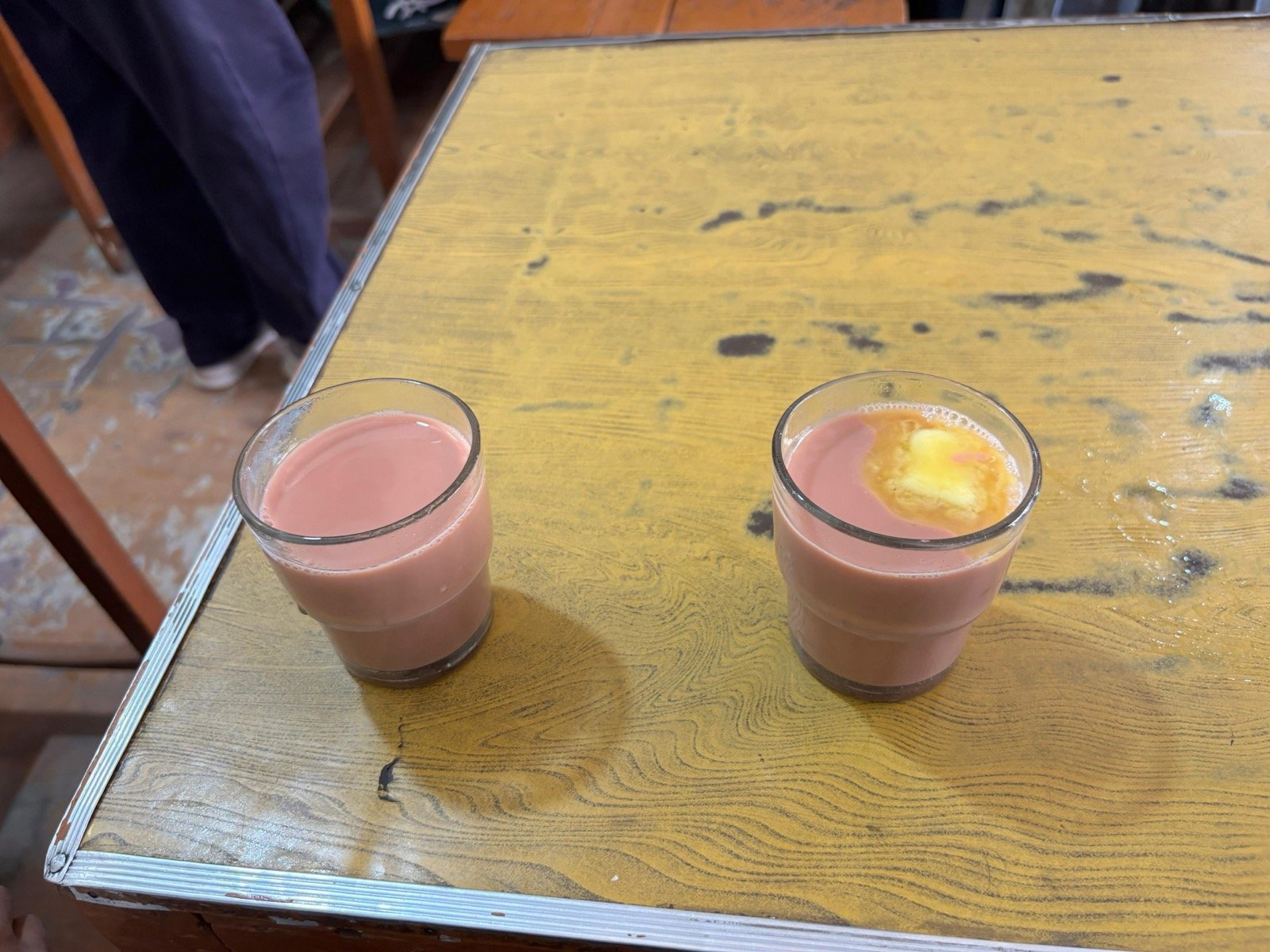
Noon chai is Kashmir's daily salted pink tea - baking soda, milk, and a specific brew that turns rose-pink. A local explains the chemistry, the samavar method, and where to drink it in Srinagar.
In This Article
Quick Answer: Noon chai (also called shir chai) is a traditional Kashmiri salted tea made with green tea leaves, sodium bicarbonate, water, and whole milk. The pink colour is a chemical reaction - baking soda makes the brew alkaline, shifting the tea's anthocyanins to produce a reddish-pink hue that deepens when milk is added. It is drunk daily in most Kashmiri households, most often poured from a samavar and served with bakery bread called girda, kulcha, or lavasa.
There is a specific sound to a house waking up in Kashmir. It is the samavar being lit in the kitchen, the metal warming, the tea starting before anything else. Noon chai is what comes out of that ritual - salty, slightly smoky when made on a wood stove, pink in the cup. When visitors to Kashmir first see it, they take a photograph. When they drink it for the first time, they look confused. When they drink it for a week, they start craving it in the morning.
Why Is Noon Chai Pink?
The colour is chemistry, not a dye. Kashmiri green tea leaves contain compounds called anthocyanins - the same class of pigment that makes red cabbage red and blueberries blue. Anthocyanins are pH-sensitive: in an acidic environment they appear red; in an alkaline environment they shift toward pink-purple.
When you add sodium bicarbonate (baking soda) to the brew, you raise the pH - make it alkaline. The water turns deep red-brown. Then comes the milk. Fat molecules in whole milk lighten and diffuse the colour, producing the characteristic dusty rose-pink that makes noon chai look like no other tea in the world. The specific Kashmiri kangri chai cultivar has a higher anthocyanin concentration than standard green tea, which is why the same baking soda trick does not produce the same colour with other leaves.
Research published in the Journal of Food Science confirms that traditional Kashmiri tea leaves have measurably distinct phytochemical profiles - including significantly higher anthocyanin concentrations - compared to commercially-grown green tea varieties. The colour of noon chai is not replicable with a substitute leaf.

How Is Noon Chai Made? (Traditional Samavar Method)
- Boil water in a samavar or heavy pot - noon chai is a long-cook tea, not a steep.
- Add Kashmiri green tea leaves: approximately 2 teaspoons per cup of water.
- Add a pinch of sodium bicarbonate - ¼ teaspoon per litre. Too much makes it bitter; too little and the colour stays brown.
- Simmer for 20-30 minutes. The water will turn dark red-brown as the alkaline reaction develops.
- Add cold water and beat or churn the mixture (traditionally using a cylindrical khambir vessel). Aeration deepens both colour and flavour.
- Strain the base liquid. Add whole milk - roughly one part milk to two parts tea base - and heat gently without boiling.
- Serve with salt. In traditional preparation the salt is already in the brew, added to taste.
What Does Noon Chai Taste Like?
Salty is the first thing. The salt is upfront and present, not subtle. Then there is a mild creaminess from the milk and a slight bitterness from the tea, which is held in balance by the fat. The combination is warming and sustaining - designed for cold weather and long mornings. Visitors who expect something sweet are caught off guard. Noon chai is not a dessert tea. It is a working tea, a breakfast tea, a between-prayers tea.
Noon Chai vs Kahwa: What Is the Difference?
- ✓Noon chai: salted, creamy, pink, made with baking soda - morning and daily use, served with bread (girda, kulcha, lavasa)
- ✓Kahwa: spiced (cardamom, cinnamon, cloves), amber-gold, slightly sweet, fragrant - for guests, ceremonies, and after meals
- ✓Noon chai is what a family drinks every morning. Kahwa is what a family serves when you come to visit.
- ✓If you stay on a Dal Lake houseboat, you will likely receive kahwa on arrival and noon chai with breakfast - they are distinct in purpose, not interchangeable.
Where to Drink Noon Chai in Srinagar
In a Kashmiri home is the best version - if you have any connection that leads to a home breakfast invitation, go. The noon chai there will have been made in a proper samavar, possibly on a wood fire, and will be nothing like the tourist-facing versions.
The area around Khayam Chowk and the Old City bakeries near Nawa Kadal is where Srinagar residents pick up girda and kulcha in the morning. Most of the small teashops here serve noon chai with the bread. Early morning (7-9 AM) is the right time. The stretch around Lal Chowk also has working chai dhabas where noon chai is served in steel or glass cups for ₹20-30.
Houseboats on Dal Lake and Nagin Lake routinely include noon chai as part of the morning meal. Ask specifically if it is not on the table - some houseboats default to standard chai or kahwa for non-Kashmiri guests unless asked. Via Kashmir's Srinagar packages include an Old City morning walk with a neighbourhood bakery tea stop, one of the better ways to encounter this tea in context.
Can You Make Noon Chai Outside Kashmir?
Yes, with the right tea. Standard green tea does not produce the same colour or flavour - the anthocyanin content differs. Kashmiri tea leaves are available at Srinagar's Residency Road shops and can be taken home. The baking soda quantity is the most common point of failure - use less than you think you need. A pinch per cup of water, not a teaspoon.
Frequently Asked Questions About Noon Chai
What is noon chai made of?
Noon chai is made from Kashmiri green tea leaves, sodium bicarbonate (baking soda), water, whole milk, and salt. The baking soda creates an alkaline reaction that turns the tea dark red, and when milk is added the brew takes on its characteristic dusty pink colour. Sugar is not traditionally used; the tea is savoury, not sweet.
Why is Kashmiri noon chai pink?
The pink colour comes from a pH reaction between baking soda (an alkali) and the anthocyanins in Kashmiri green tea leaves. Alkaline conditions shift these pigments from green-brown to red-pink. Adding whole milk then diffuses and lightens the colour to the dusty rose-pink seen in the cup. The same trick does not work identically with other tea varieties because the phytochemical composition differs.
Is noon chai the same as shir chai?
Yes. Noon chai (noon means salt in Kashmiri) and shir chai (shir means milk) are the same drink referred to by different names. In Srinagar and central Kashmir, noon chai is the more common name. In some households, particularly in rural areas and the Gurez valley, shir chai is preferred. Both names describe the same salted pink tea.
Is noon chai healthy?
Noon chai contains antioxidants from green tea and calcium from whole milk. It is high in sodium - the salt content is significant by modern dietary standards. Traditional Kashmiri diets in colder areas historically required higher salt intake for cold-climate caloric balance. For occasional visitors, one or two cups daily is not a health concern. For people managing sodium intake, it is worth being aware of.
Where can I buy Kashmiri tea leaves to make noon chai at home?
Kashmiri green tea leaves are sold at tea shops on Srinagar's Residency Road, in the Lal Chowk area, and in most Old City bazaars. Reliable sources are the established shops that have been operating for several decades - the owners know which batch and grade produces the right colour. Via Kashmir can help identify specific shops during a Srinagar stay.
Kashmir Pulse is Via Kashmir's editorial channel - written by locals, not agencies.
Planning a trip to Kashmir?
Plan with Via Kashmir →Kashmir Pulse Editorial
Travel Writer
Writing about Kashmir from the inside - hotels, culture, seasonal travel, and the stories that don't make it into guidebooks.
Ready to Experience Kashmir?
Let our local experts craft a personalised trip for you - hotels, houseboats, cabs, and experiences handpicked for your travel style.